
What we aim to do?
✦ The Story Behind
the Sign Tales Project
Sign Tales was born from a shared commitment to inclusion, multilingualism, and accessible education. The project took shape in 2023 during a general meeting of the HIPEN Network (Hearing Impairment Professionals European Network), where language teachers and education coordinators from partner schools gathered to reflect on a recurring challenge: how can we effectively teach English to deaf students in a way that is both accessible and meaningful?
The motivation behind the project stems from a concrete need. In many schools for deaf students across Europe, there is no clear methodology for teaching English as a foreign language. Teachers often lack tools adapted to sign language users, and yet educational systems do not allow for students to be exempted from entire subjects — doing so would undermine the legal validity of their diplomas. At the same time, deaf students have full cognitive capacities and deserve equitable opportunities for academic success and university access.
To better understand the situation, the project partners conducted a needs analysis, including focus groups and a literature review. This research revealed widespread difficulties, both motivational and methodological, in language teaching for deaf students. Existing practices, often based on spoken input or written drills, were found to be insufficient and not inclusive. This prompted the team to explore new paths.
The result is Sign Tales: an innovative project that blends English language learning with International Signs (IS) and visual storytelling. By adapting culturally significant literary narratives from across the EU into bilingual resources (written English and International Signs), the project aims to:
✦ Strengthen deaf students’ literacy and multilingual skills
✦ Promote inclusive and creative language teaching methodologies
✦ Equip teachers with practical, accessible, and engaging tools
✦ Foster intercultural awareness and critical thinking through storytelling
The project also responds directly to several EU educational priorities:
✦ LANGUAGES: Encouraging multilingualism as a key competence for all citizens
✦ KEY COMPETENCES: Addressing literacy gaps by providing tailored support to deaf learners
✦ INCLUSION: Promoting equal access to education through adapted resources and sign language
Ultimately, Sign Tales is not just a project — it is a shared mission among schools and professionals across Europe to make language learning truly inclusive, meaningful, and joyful for all.

Partners Introduction
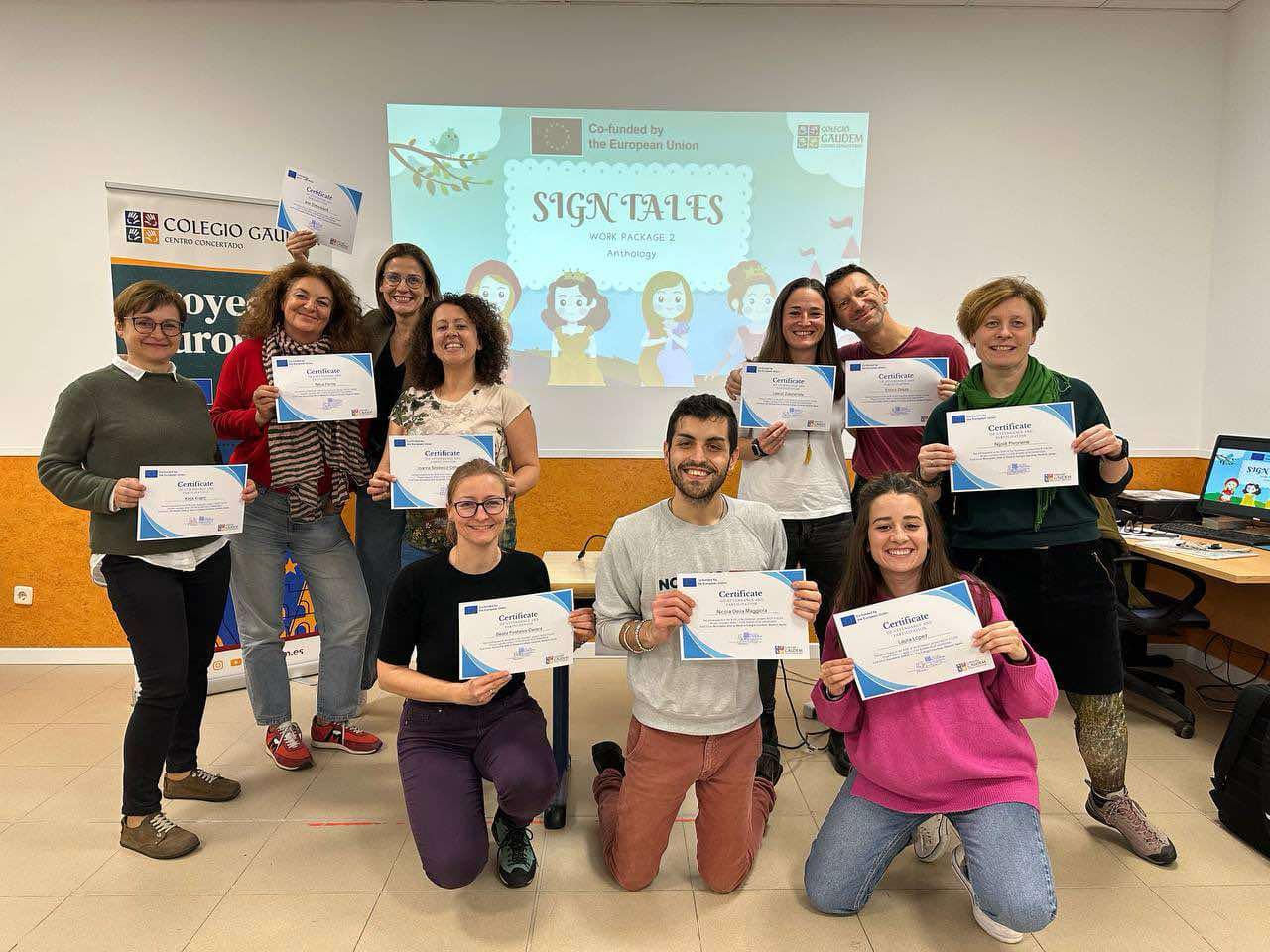
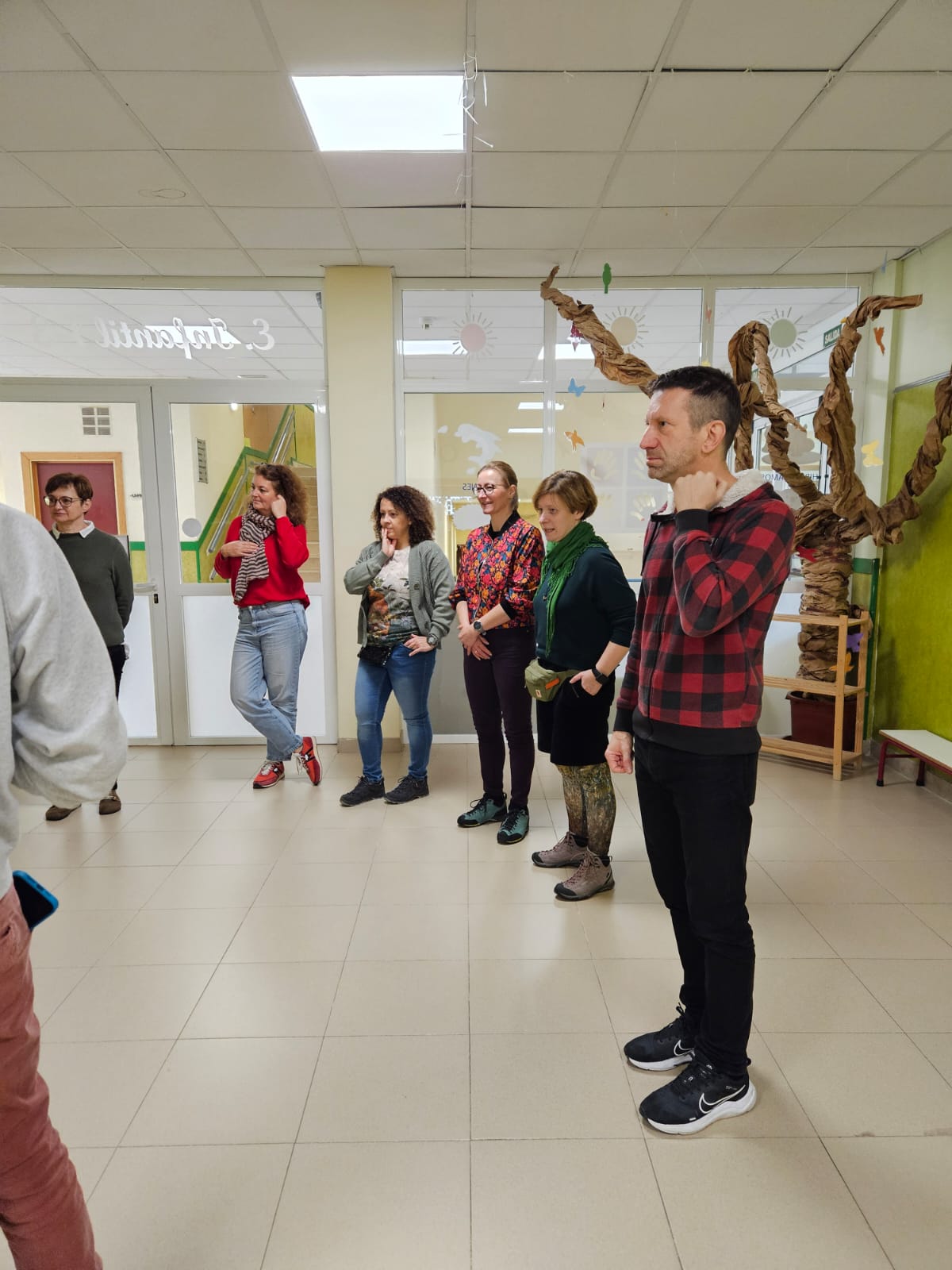
“Sign Tales” brings together six schools for the Deaf from six different countries, working collaboratively to create an inclusive educational experience.
The Lithuanian Centre for the Education of the Deaf and Hard of Hearing (LKNUC)
The Lithuanian Centre for the Education of the Deaf and Hard of Hearing (LKNUC), established in 1945, is a state institution that provides education to children with hearing impairments at various levels, from preschool to vocational training. The centre also has a Sign Language Promotion and Training Department that encourages the use of sign language, as well as an Educational Support Department offering specialist assistance throughout the country. LKNUC aims to be a modern, open, and inclusive educational institution that ensures the integration of deaf and hard of hearing individuals into society and supports their successful independent living.
Colegio Gaudem
Gaudem School, formerly the Instituto Hispanoamericano de la Palabra, was founded in 1962 as a school specialized in the education of deaf students. In 2008, it transitioned to an inclusive model, welcoming hearing students and fostering a shared learning environment that is accessible and enriching for all. The school embraces a diverse student body, including deaf students, students with intellectual disabilities, autism (ASD), students without disabilities, and those in vulnerable situations. It follows a bilingual approach, integrating Spanish Sign Language (LSE) and Spanish, as well as English and Spanish. Gaudem implements a co-teaching model, with two teachers in each classroom—one specializing in spoken language and the other in sign language—ensuring full participation for all students. Additionally, the school offers specialized programs for students with disabilities and social difficulties, promoting inclusion through shared activities. The school also provides a wide range of extracurricular activities and speech therapy services, supporting the holistic development of its students. Managed by a teaching cooperative, Gaudem School remains committed to an accessible, inclusive, and high-quality education.
Specjalny Ośrodek Szkolno-Wychowawczy dla Niesłyszących im. Janusza Korczaka
Specjalny Ośrodek Szkolno – Wychowawczy dla Niesłyszących im. Janusza Korczaka is a special education center providing services for hearing impaired students, deaf students and students with aphasia or communication disorders. The Centre consists of Special I Sectoral Vocational School, Special Technical Secondary School, Special High School and Post-secondary School and educates students from 15 to 24 years old. The school staff are professionals trained in deaf education and oligophrenic pedagogy, who work as a teachers, special educators – tutors, vocational trainers, speech and language disorders therapist and psychologist. The main goal and task of the Center is to provide students with such a level of general, professional and social preparation that they will be able to live independently in the family, community and society.
ERGON - a favore dei Sordi
The Association was founded in 2010 in order to support a group of youngsters, young adults, alumni of the Istituto dei Sordi di Torino, to develop entrepreneurial skills and be more active in the world of work. The basic idea was to cooperate with the school in the management of some facilities (cantina, cafeteria) and to re insert some unused assets into the economic track, such as a small farmland and some rooms formerly used for school purposes. All this in a perspective of growth also in the digital environment and with the introduction of innovative technologies in activities previously managed with very traditional formulas. The association is active in the field of dual discrimination, working mainly with young people that face at least two possible reasons of weakness in the society: disabled and migrant; disabled and women; disabled with double diagnosis; disabled and unemployed.
Základní škola a mateřská škola pro sluchově postižené – Plzeň
Our school is engaged in specialised education. We cater for children of pre-school, junior and senior school age. In our educational institution we teach according to two educational programs. Deaf pupils are educated according to the programme “I can’t hear but I understand”. Teaching is adapted to children with hearing impairments and sign language is respected as their mother tongue. Teaching is done through total communication and Czech is taught as the first foreign language. The second teaching programme, “I want to speak like the others”, is dedicated to pupils with hearing impairments, speech impediments, sensory impairments and specific learning difficulties. Our teaching programmes provide a primarily individual approach, a reasonable pace of work and classes with small numbers of pupils. We try to individualize our teaching approaches as much as possible to best meet the specific needs of our pupils. We provide boarding accommodation for pupils from further afield.
Zavod za gluhe in naglušne Ljubljana
Zavod za gluhe in naglušne Ljubljana/ Ljubljana School for the Deaf is the central Slovenian state institution for the education of deaf, hard of hearing and speech impaired children and adolescents. All children and students in our school are children with special needs. Units in our school are: kindergarten, primary school, vocational secondary school and health unit.
We educate children from the time of diagnosis until they have completed their studies at our secondary school. Our primary goal is the optimal development of the child’s abilities in all areas, with special emphasis on the development of language (the Slovene language and the Slovenian Sign Language), communication, hearing and speech. The education of the Deaf is supported by the Slovenian Sign Language and the Slovene language. The hard of hearing children and the children with cochlear implants are educated in the Slovene language with the emphasis on individual speech therapy and hearing training. We employ both hearing and deaf teachers.
School is experienced partner in many European projects for children, students and professionals.
Our goal
Accessibility
Ensuring that Deaf and hard-of-hearing students have access to high-quality educational resources in International signs and written English.
Educational support
Providing teachers, educators, and families with structured materials to enhance Deaf student's learning experience.
Bilingual Learning
Promoting the development of English and International sign skills through engaging literary content.
Cultural Representation
Encourage the appreciation of European literary heritage, making stories available to Deaf learners.
Our vision
1. Develop a multilingual literaty collection:
Create a selection of 18 adapted literary works, folklore, and fairy tales from six European countries, translating them in International Signs and national sign languages.
2. Adapt educational materials for
different age groups:
2. Adapt educational materials for different age groups: Ensure that the content is available at three educational levels — Level I, Level II, and Level III — making it suitable for diverse learning needs.
3. Create an International signs -
English dictionary:
Develop a glossary of essential terms.
4. Provide structured educational resources:
Provide resources for teachers on how to effectively use these materials
when teaching deaf children.
5. Encourage deaf children's storytelling skills:
Support the development of narrative expression in sign language,
fostering creativity and self-expression.
6. Promote cultural exchange:
Encourage the appreciation of European literary heritage, making traditional stories available to deaf learners.
7. Increase awareness:
Promote sign language accessibility and deaf inclusive education, ensuring that more schools and institutions recognize the importance of bilingual learning for deaf students.


